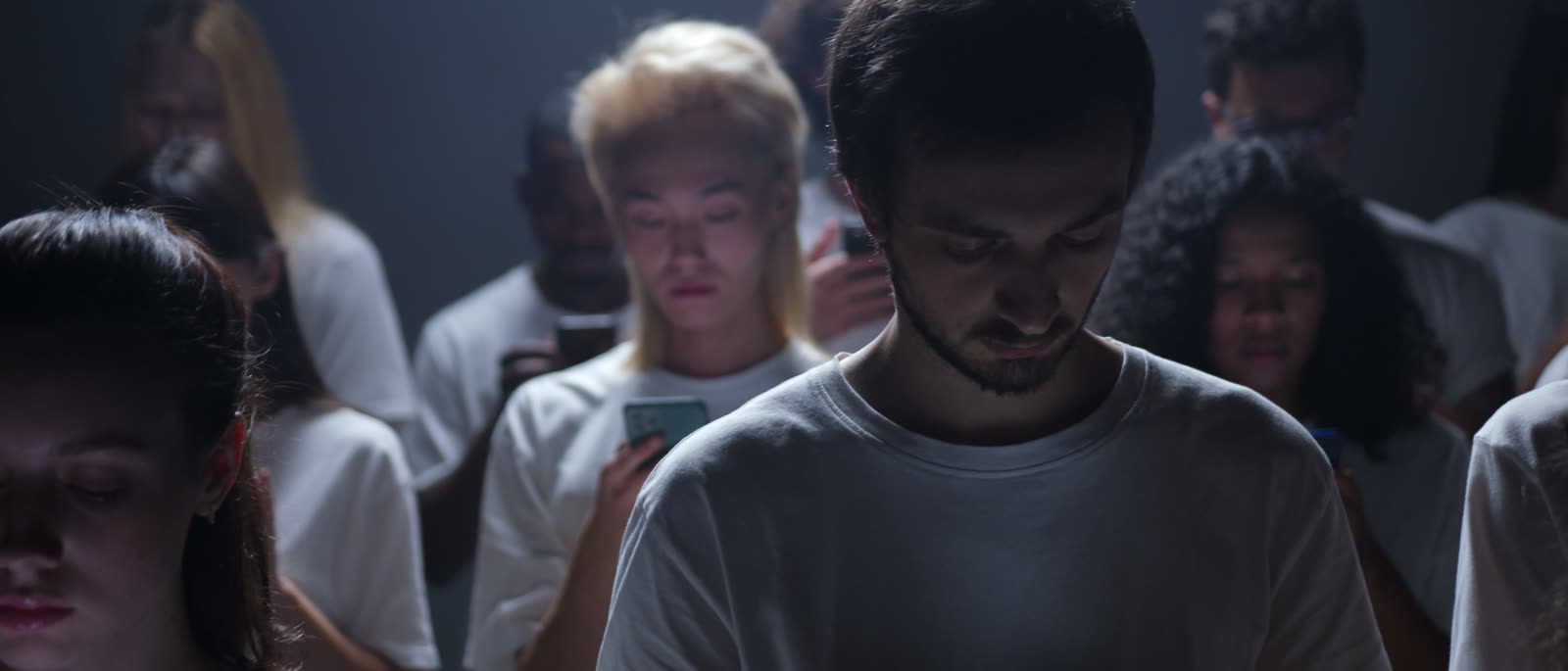
All of these work. The question isn't whether they work in the moment — it's how long you keep them. A method abandoned after four days has a real-world effectiveness of zero.
Here are the six, with what each one costs and what makes people quit.
1. Deleting the app
What it does: everything goes at once. It's the most effective method for as long as it lasts.
Why it fails: your messages go with it. The groups, the family photos, sometimes part of your work. The social cost is immediate and the benefit diffuse — exactly the ratio that gets it reinstalled within three days.
Who it works for: people whose social life doesn't run through that network. That's a minority, and they already know it.
2. App blockers
What it does: access is cut at a set hour, or after a quota.
Why it fails: opening the app was never the problem — what happens once you're inside is. A blocker treats access, not content. It also blocks the legitimate five minutes where you wanted to reply to someone, which is what pushes people to disable it “just this once”.
The trap: the stricter the block, the faster you learn to route around it. Most people know their own restriction passcode by heart.
3. Screen Time and built-in limits
What it does: iOS and Android measure, warn, then limit.
Why it fails: “Ignore limit” is a button. It sits an inch from your thumb, at exactly the moment willpower is lowest. The measuring, though, stays genuinely useful — it's the best part.
4. Greyscale
What it does: removing colour makes thumbnails less pulling. The effect is real and documented.
Why it fails: it degrades the whole phone, photos, maps and camera included. You turn colour back on for one specific reason, and forget to turn it off again.
5. A second account, or a second phone
What it does: a fresh account has no history, so a thin recommendation feed.
Why it fails: the algorithm learns fast. A few days is enough to rebuild a feed as gripping as the old one — and now you have two accounts to watch instead of one.
6. Removing the mechanics, keeping the network
What it does: the network opens normally, but the short-video feeds, the recommendations and the discovery pages aren't there. Messages, the accounts you follow and profiles don't move.
Why it holds: there's nothing to hold. No quota to respect, no hour to wait for, no “ignore” button to avoid pressing. The setting is made once and asks nothing more — and it never cuts off the thing you installed the app for.
Its limitation, stated plainly: the rules describe the markup of sites nobody controls. When a network redesigns, a filter stops biting until the rule is fixed. That's the price of this approach, and it's why Slowcial's rule set is served separately from the app — repairable in minutes rather than days.
The table
Methods that cut access
- Deleting: you lose the messages
- Blockers: you lose legitimate use too
- Built-in limits: one “ignore” button is enough
- Requires effort every day
Methods that remove mechanics
- Messages and the people you follow stay
- Only the feed built to hold you goes
- Nothing to ignore, nothing to route around
- Set once
What to choose
- If the network does nothing for you socially — delete it. It's simpler and free.
- If the problem is evenings — a time window is enough, and plenty of tools offer one, Slowcial included.
- If it costs you time but you can't leave — removing the mechanics is the only method here that doesn't ask you to choose between your time and your people.
The best method isn't the strictest. It's the one you'll still have in six months.
Frequently asked questions
What's the most effective way to scroll less?
In the moment, deleting the app. Over time, removing the engagement mechanics while keeping the network — because it's the only one that doesn't cost you access to your messages, and so doesn't get abandoned after a few days.
Do app blockers work?
They cut off access, which solves a different problem: the problem isn't opening the app, it's the endless feed you find inside. And because they block legitimate use too, they end up switched off.
Does greyscale actually reduce screen time?
The effect is real: a feed without colour pulls less. Its weakness is that it applies to the entire phone, photos and camera included, so you disable it for one specific reason and forget to re-enable it.
Can you keep your messages while removing reels?
Yes. That's precisely what filtering does: the network opens with your account, your conversations and the people you follow intact, but without short-video feeds, suggestions or discovery pages.